Funky Forest Health & Wellbeing
  • Home
  • About
    • About Casey
    • Philosophy >
      • Non-Diet Approach
      • Health At Every Size HAES ®
      • Intuitive Eating
      • Holistic Dietitians
    • Modalities >
      • Dietitian
      • Naturopath
      • Nutritionist
    • Treatments >
      • Dietetic & Nutritional Therapy
      • Eating Disorder Therapy
      • Herbal Medicine
      • Flower Essences
  • Clients
    • Acute Herbal Prescribing
    • Consultations >
      • How I Can Help
      • Fees & Rebates
      • Structured 12-Week Care
      • Book a Consult
    • Courses >
      • The Poisoned Path
    • Yoga >
      • Class Schedule
      • Private Sessions
      • AcroYoga
    • Retreats
    • Herb Walks
  • Praccies
    • FREE Webinar: Shi!t My Client Has Disordered Eating
    • FREE You Don’t Need to Treat the ED to Help! Guide
    • FREE 7 Red Flags Guide
    • FREE Clinical Training
    • Disordered Eating Training for Natural Health Practitioners
    • Body as Earth Retreats
  • Apothecary
  • Resources
    • Podcast
    • Blog
    • Freebies >
      • Newsletter
      • A Modern Yogi's BS-Free Guide to Wellbeing
      • Elimination Diet Email Series
  • Contact
    • Newsletter

Casey's blog

5 Red Flags of Disordered Eating (And How Not to Cause Harm)

25/9/2025

 
Picture
This article is part 2 of a mini-series on disordered eating in naturopathic practice. Over three parts, we’ll explore the eating spectrum, the red flags you need to know, and how to avoid accidentally fuelling diet culture in clinic.

Whether you’re a naturopath, herbalist, or other holistic practitioner, this series will start giving you the frameworks to support clients safely and effectively - without causing harm.

Through a naturopathic lens, this is Primum non nocere (First, do no harm) and Tolle totum (Treat the whole person). We’re not here to police plates; we’re here to restore healthy relationships with appetite, body, food... and essentially, oneself.
​

The 5 Red Flags (and how to respond)

I’ve spent years trying to capture what disordered eating looks like in real life. The problem was, my lists kept getting longer and longer: the client who avoids carbs after 6pm, won’t eat until 11am, keeps boxes of weight loss supplements stashed away, cooks high-calorie meals for everyone else but won’t touch them, body-checks every time they pass a mirror, or spends 75% of their waking hours thinking about food and weight.

The truth is, disordered eating shows up in endless ways. And when I focused on every possible detail, it was easy to miss the bigger picture.

So instead of a looooong checklist, I now group these patterns into five broad families. I won’t list every symptom under each, but if you know the gist of these five, you’ll be much better equipped to spot disordered eating in practice... without losing sight of the person in front of you.

So here are my five red flags, in no particular order of importance:


Read More

Between Grifters and Skeptics: Finding Our Place in Holistic Medicine Post-COVID

16/9/2025

 
Picture
Being a holistic health practitioner after the tidal waves of COVID-19 that have hit us often feels like walking a frayed tightrope. On one side, mainstream medicine pretty much dismisses anything outside the biomedical model as pseudoscience, “woo,” or magical thinking. On the other, parts of the wellness industry veered into contrarianism, conspiracism, rugged individualism, and healthism - using the pandemic as fuel for branding and sales.

And those of us in between - who care deeply about evidence, community, and tradition - were left trying to hold nuance in a world that desperately wanted extremes.
​

Read More

The Cacao Cacophony: Deconstructing a Pseudo-spiritual Experience

15/9/2025

 
Picture
What do you get when you combine a cacao ceremony, hypoxia-inducing breathwork, a bunch of influences from pretty disparate spiritual cultures, partner yoga with intrusive eye gazing, and really loud music?

​All that culturally appropriated jazz.
"Life's but a walking shadow, a poor player,
That struts and frets his hour upon the stage,
And then is heard no more.
It is a tale told by an idiot,
Full of sound and fury, signifying nothing."
- Macbeth in Macbeth by William Shakespeare, circa 1606
I'm lying in the middle of a nag champa-centred earthquake. There is music playing, first a Sanskrit mantra on repeat, then Tibetan throat singing overlaid by what sounds like a woman chanting in Buddhist mantras. The music is playing at such a high volume that the floor vibrates. An enormous Chinese gong suspended from the ceiling in the middle of the room is being hit intermittently by one of the two facilitators of this retreat. It is so deeply resonant that it sends shockwaves through my brain.

The second facilitator walks around the room shaking an Aboriginal rainmaker instrument over the tops of the 30-odd participants' heads. I'm lying on the floor and my eyes are closed. I can't imagine adding yet another sensory input to the auditory and physical overload I'm currently experiencing.

But there's more. The main instructor is repeating his initial verbiage over and over again. He's encouraging us to, "trust the process, push past the mind. You didn't come here just to lie down! Allow the healing cycle to complete. Find the truth!"

Around me are the sounds of people in multiple forms of distress. Some are openly weeping. Quite a few are breathing in and out, really hard, long after I have stopped following the breathwork instructions given to us at the beginning of the retreat. I open my eyes to get a peek of the room. The woman next to me is shaking her legs about frantically, which, to be honest, I also feel like doing, but free movement was not in included in the instructions and I'm trying to have as authentic an experience as I can by following these instructions.

​

Read More

The Eating Spectrum in Practice: From Intuitive Eating to Disorder (And How I’ve Lived Every Stage)

27/8/2025

 
The eating spectrum isn’t just theory - it’s something I’ve walked through myself. In this article, I unpack what each stage can look like, and why recognising the messy middle matters for practitioners supporting clients with food struggles.

* Content Note on Lived Experience *

Before we go further, I want to acknowledge that in this article I share some of my own lived experience with disordered eating. While I don’t go into graphic detail, please take care while reading and pause or close the window if you need to.
It’s also important to say: sharing lived experience is not something every practitioner needs to do. Many excellent clinicians choose not to, and their work is no less valid or powerful. Personally, I share parts of my story because it helps to reduce stigma, to show that recovery is possible, and to remind us that the eating spectrum is not just theory - it’s something I’ve walked through myself, and it definitely shapes the way I practice today.

Picture

​As naturopaths, herbalists, and holistic practitioners, many of us see clients who are quietly struggling with food. But here’s the tricky thing: they rarely walk in and say, “I think I have an eating disorder!”

Instead, they show up with gut issues, fatigue, hormonal symptoms, or weight / body image concerns. If we’re not careful, the way we respond can either help them move toward healing, or unintentionally push them further into disordered eating.

The truth is, disordered eating is far more common than diagnosed eating disorders. According to the National Eating Disorders Collaboration (NEDC), disordered eating behaviours - things like restrictive dieting, compulsive exercise, and binge eating - occur on a continuum and affect a much larger proportion of the population than clinical eating disorders (NEDC, 2019). Research suggests that while around 10% of Australians will experience a diagnosable eating disorder in their lifetime, many more engage in disordered eating behaviours - with studies showing rates as high as 60% of adolescent girls and nearly 30% of adolescent boys reporting behaviours like dieting, bingeing, or purging at some point (NEDC, 2019).

International studies show similar trends, with dieting and disordered eating behaviours affecting a large proportion of adults as well (Neumark-Sztainer et al., 2006). ​Disordered eating symptoms have risen sharply in recent decades. Between the late 1990s and mid-2000s, the prevalence of weekly binge eating more than doubled, while strict dieting and purging behaviours increased nearly fourfold, alongside declines in quality of life (Preti et al., 2009).

This all means that most of our clients are not in a happy, healthy place with their eating, food, and bodies, and it's only a minority that have diagnosed eating disorders. Many folks are sitting in that messy middle zone. And this is exactly where practitioners can either cause harm or provide vital support.


Read More

Ep 34. From Yogi to Naturopath: What Changed, What Didn’t, and What’s Next

5/8/2025

 
After a few years off the mic, I’m back - with dirt under my nails, a herbal medicine apothecary by my side, and a renewed fire in my belly.

In this episode I share why I’ve renamed the podcast The Non-Diet Naturopath formerly Non-Diet Yogi), what’s changed (spoiler: a lot), and what remains the same (like my intolerance for wellness horse shit). I talk about leaving behind yoga spaces steeped in clean eating and labour extraction, the fallout I faced for standing by public health, and why naturopaths need better tools for supporting eating disorders, chronic dieting, and neurodivergence. 

We explore:
  • What really happened at the ecovillage I used to call home
  • The rise of culty thinking in natural health spaces
  • The dangers of misinformation and why critical thinking matters now more than ever
  • Why naturopaths need better tools to support clients with eating disorders and chronic dieting
  • Building a different path forward, with more earth, honesty, and neuroaffirming care.

You'll also hear about my upcoming online course, Disordered Eating for Naturopaths, launching mid-2026. Sign up to the waitlist and receive a bonus when enrolments go live!

This is the start of a new chapter. Where herbs, fat affirmation, neurodivergence, and calling out crap all belong!

LINKS:
​
Jump on the waitlist for Disordered Eating for Naturopaths

Grab your copy of my free e-book The Modern Yogi's BS-Free Guide to Wellbeing!

Support the show

TRANSCRIPT:

Prefer reading? Here’s the full word-for-word magic. Great for neurospicy brains, quote-lovers, and anyone who likes to highlight and digest at their own pace.

Download a .pdf of this episode's transcript here

From Edgy to Empty: Rethinking Wellness Rebellion

31/7/2025

 
Picture
Being “Anti-Mainstream” has become… Mainstream. And it's boooorring.
Once upon a time in wellness spaces, it felt daring - hell, revolutionary - to question mainstream narratives about health and diagnosis. Saying stuff like:

  • “ADHD is just a symptom of disconnection.”
  • “Medications are poison.”
  • “Big Pharma and the government want to keep you sick.”

These kinds of claims gave people a rush... like they were waking up, taking their power back, seeing behind the curtain.

It felt edgy. It felt exciting. Kinda like hearing Tool might be touring Australia again this year - suddenly everything feels a little more alive, a little more charged, you get full body anticipatory orgasms, and the world suddenly isn’t as dull and controlled as you thought. 

Or maybe that's just me. Anyways...

Those kinds of dopamine-inducing, heterodox hot takes were titillating AF. They scratched that itch we (I assume) all have - the one that says “something’s off” and “burn it all down” might be a legit plan.

But now, something’s shifting.

These takes - once framed as radical truth bombs - are starting to sound… dry. Worn. Predictable. Kinda... boring as batshit. More and more, these once-edgy statements feel less like disruptive insight and more like recycled scripts.

​A kind of performative contrarianism that lacks the depth, critical nuance, or heart it once promised.

It’s like every voice shouting “WAKE UP!” (and not in Rage's badass, righteous kind of way)* is starting to sound the same. What used to feel like a spark now lands like a punch in a moshpit: no rhythm, no resonance, just bodies crashing in the same beat of rebellion with no space for breath, pause, or nuance.


Read More

Individualism in Wellness Culture

25/4/2025

 
Picture
If you’ve ever fallen ill and wondered “what did I do wrong?” – or had someone suggest that you brought your illness upon yourself – then this is for you.
 
A little personal story. Recently I was at the end stage of a cold and had to attend a community meeting. At the beginning of the meeting, I apologised for any disruption my cough might cause, that it was the tail end of a cold and I was no longer at the contagious stage but that I’d sit at the end of the table so as not to make anyone feel uncomfortable.
 
I was immediately told by someone that, “we only get sick when we’re not right in our body… when we’re not healthy.” 
 
Since we were at a meeting I dismissed this with “I don’t agree with that,” and continued with the meeting. The person later told me they were simply trying to say they weren’t worried about getting sick because they were healthy, that they were not a “germ phobe or a virus phobe” and that no offence was meant…
 
This “germ theory vs inner terrain” polarity is common in wellness culture and reflective of how individualist and over-simplified it has become.
​

The “Germ theory VS Inner Terrain” false dichotomy

Really quick summary. Germ theory basically says that external bacteria, viruses and so on are what we need to think about and we need to focus our efforts into killing the germs. Whereas terrain theory (or "inner terrain" as it's sometimes referred to) argues that if the body is well and balanced, then germs that are a natural part of life and will be dealt with by the body without causing sickness.
 
Both theories are, in fact, important. But in many wellness circles there’s a pervasive belief that if we’re healthy and not stressed, we will never get sick. That pathogenic viruses, bacteria, fungi, cancer, and so on can’t affect us if we just look after ourselves properly. And conversely, that if we do get sick, it is because we were somehow not “right” in body or mind. That somewhere, we dropped the ball. In this mindset, wellness is entirely the individual's personal responsibility and pursuit, with a focus on self-reliance, thinking positive emotions, that sort of thing.
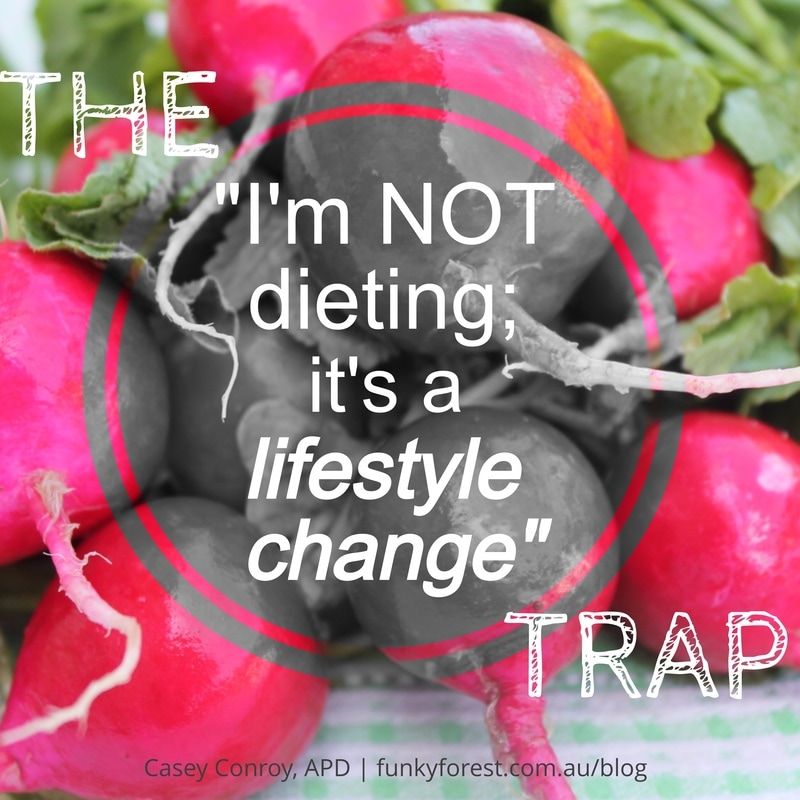
 
This attitude is harmful. It’s health shaming. It’s wellness culture’s form of victim blaming. On a personal level, as an able and small-bodied cis-het woman under 40 who lifts weights, takes all the herbs, does all the yoga, doesn’t get sick often and has never experienced severe chronic illness, this was one of the rare times in my life I felt health shamed. And it sucked.
 
I can’t imagine what people with chronic illness, bodies that don’t adhere to the cultural standard, and people with disabilities experience every day when confronted with such an individualist attitude to wellness. I can imagine this health shaming attitude wouldn’t improve their health but have the opposite effect. To tell a sick person that one’s health outcomes are 100% the individual’s responsibility is - to put it lightly - not very nice.
 

health - it's complicated

It’s also inaccurate. Yes, our physical, mental and spiritual health can contribute to our susceptibility to illness. As a naturopath, dietitian, and yoga teacher I’m in the business of helping people with diet and exercise, determinants of health that are somewhat within our control. But it’s naive to think that keeping yourself healthy confers invincibility from the maladies of life.
 
People who do yoga, eat organic and exercise can still get head colds, depression, and cancer. Illness can and does happen to those who follow wellness culture’s rules, and this shouldn’t be an invitation to question what that person did wrong - or pat oneself on the back for “doing it right” and avoiding illness. Rather, it should be an invitation to empathise, remember our collective vulnerability and interconnectedness, and care about the person in front of you rather than blame them.
 
Inner terrain counts. So does germ theory. So do genetics, access to health care, social support systems, soil health, the public health environment, and disparities such as systematic racism, ableism, fat phobia, homophobia, transphobia, and many other factors out of our control.

We can do our best to look after ourselves. And we all want to feel like we are completely in control of our bodies and our health, but the truth is we never can be. And that truth is uncomfortable. Especially in an unpredictable world where our needs for safety and security are increasingly harder to meet.

 
Health is not a gauge of “rightness” in your body, of purity, or of how well you’ve performed wellness. It’s just not that straightforward. Individual health is tied to the health of our communities, the land and every part of our ecosystems. It’s not just about whether or not you grow your own vegetables and meditate.

I would love to see us redefine wellness so that it better serves the collective and is rooted in fairness, critical analysis, and access. We can start by not stigmatising people with acute or chronic illness by insinuating that their sickness is somehow their fault. By not stigmatising people in larger bodies by implying that their body size is completely under their control and they just haven’t tried hard enough to lose weight. By learning to accept, appreciate, and accommodate the needs of neurodivergent folk, rather than trying to ‘cure’ them or assigning blame for their neurodivergence.

I could go on.
 
Please, let’s embrace nuance and empathy. And maybe read up on the determinants of health. Because health is complicated, illness is complicated, life is complicated and unpredictable.

​And sometimes, people get sick for no discernible reason, simply because
 shit happens.

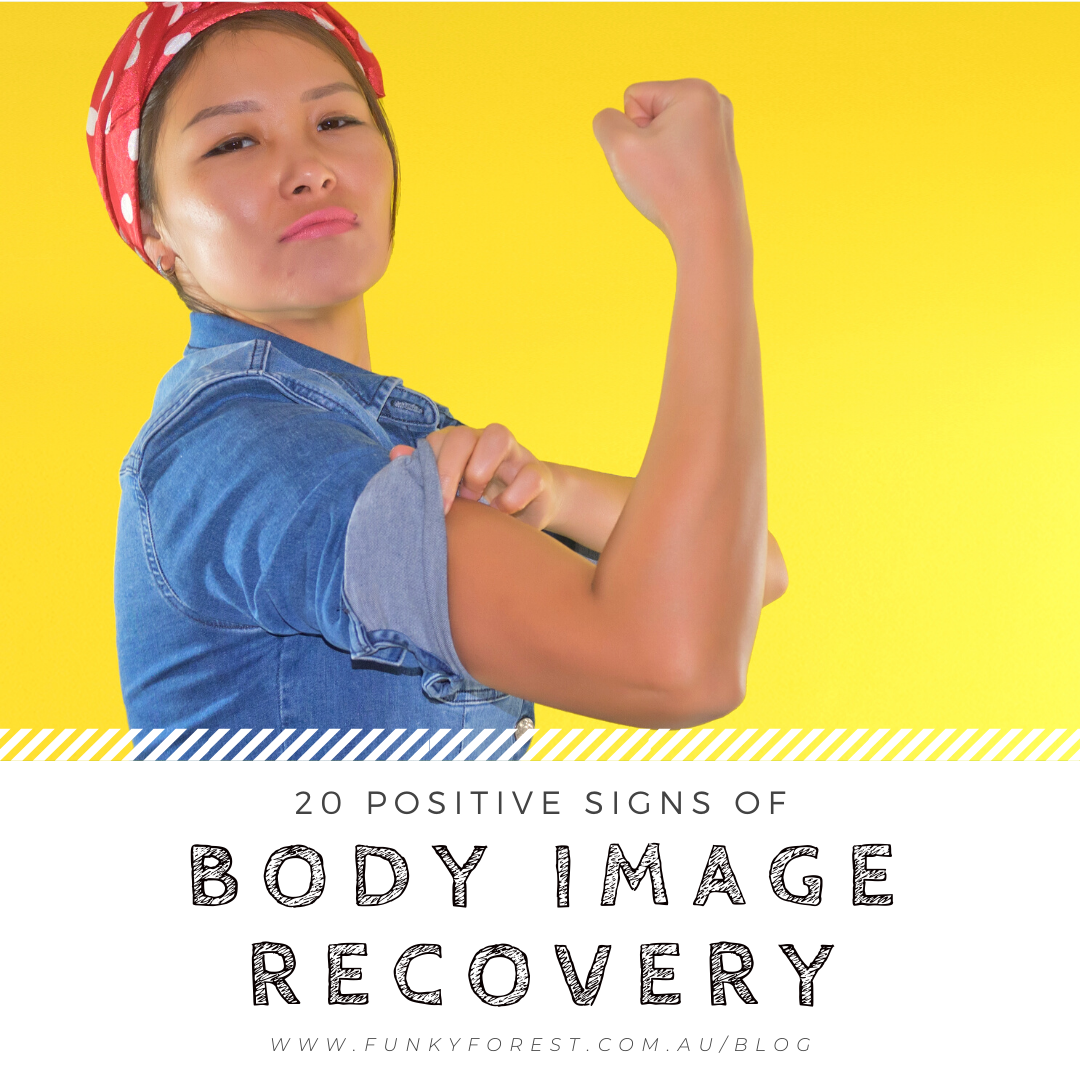
Have I Fully Recovered Yet?

7/11/2024

 
Picture
"How will I know when I have fully recovered?" This is a question many of my clients in eating disorder (ED) recovery ask. And the answer is multi-faceted.

As a teacher and student of ancient systems for comprehending the patterns in nature and applying them to our own healing processes, I offer these aspects of ED recovery through a 5-element lens. This approach is founded in the wisdom of both Ayurveda (the ancient medicine system of India) and Chinese medicine. I've written other articles on how these systems can support (or if used incorrectly, hinder) your intuitive eating journey here and here.

Whilst full recovery looks different for everyone, and we all have our personal idea of what it looks like, here are five basic elements to consider when asking the question, "have I fully recovered yet?"
​
Picture

Read More

The Beauty of Bitters

10/10/2024

 
Picture
Do you eat your bitters? Bitter foods offer a multitude of health benefits, such as improving digestion, enhancing liver detoxification, and clearing up your skin when hormonal issues lie at the root of issues like acne. But did you know bitters can also improve your mood, clearing feelings of depressed malaise and calming the fires of impatience and anger?

​In Chinese medicine and in Ayurveda, the hallmark of a balanced meal is the inclusion of all of the flavours. ​​By including all of the flavours in a meal, you’re probably going to feel very satisfied. And satisfaction is a crucial element of enjoyable, intuitive eating.

One of these flavours is bitter, a very important taste that many of us are missing on our plates.


Throughout Spring and Summer in 
my Southeast Queensland neighbourhood, edible weeds pop up everywhere including in my own my backyard.

​Under the kids’ trampoline out of the lawnmower’s reach, I find dandelion greens, sow thistle, sheep sorrel, and wild carrot, among other largely unknown yet freely available sources of nutrition (always correctly identify plants before eating them, come to one of my Herb Walks to help you with this!). At the farmer’s market I uncover a similar array: mustard greens, endive, chicory, kale, parsley, rocket.​
​

Read More

The "This Herb for That" Conundrum

13/3/2024

 
Picture
When I'm wearing my naturopath hat and deciding on which herbs to prescribe for you, there are many things I take into consideration.
​
If you ask me, "what herb is good for IBS?" or "what'll work for headaches?", you're going to get a long (and perhaps, unintentionally cryptic) answer.

This is because traditional herbal medicine is nuanced and individualised. Unlike in modern pharmacology, where you might pop a Panadol for a headache (regardless of what kind of headache it is), there are no herbs "for" any one disease state.

Instead, there are herbs that can exert certain influences on the body, and those herbs may or may not suit a specific person's constitution and current physiological and energetic state.

For instance, some people run hot, others easily feel the cold. We all know that friend who wears multiple layers of clothing and loves sipping on hot tea, even in the middle of Summer - chances are they have a cooler constitution.

Some people tend towards dryness, others towards dampness. You can likely bring to mind that person in your life who sweats really easily, or is always blowing their nose, or maybe experiences a lot of fluid retention in their hands and feet. Maybe that person is you.

Finally, some of us have contracted, tight tissues and others more relaxed or even too lax. As a yoga teacher I see the extremes of this when teaching students, with some folks hypermobile and others telling me they shouldn't be in class because they "can't even touch their toes" (by the way, that's a really good reason to come to yoga!)

These configurations aren't static. You can be both dry and damp, for instance, in different parts of the body at one time. You can be someone who normally runs cold, but you may catch a cold and run a fever and feel uncomfortably hot. And you may change states depending on your life, seasonal and hormonal cycles.

All of these considerations, and more, are taken into account when I am with you. I'm taking note not only of the words you are saying about your health or what you wrote in your diet diary, but also the way you walk into the room, your voice. In addition to analysing pathology results or calculating the nutritional adequacy of your diet, I may look at your tongue, feel your pulse, look at your irises.

All of these things point towards your unique energetics, your constitution. And if I can figure that out, then I am better equipped to choose the herb/s that are going to best support you at any one time, based on their energetics.

Some herbs are cooling, some are warming. Some reduce excess dampness, and others are nutritive and help bring hydration and softness to certain tissues. Some herbs encourage tightening up of the tissues, and others help unwind and relax them.

The form of herbs I prescribe for you is also important, with herbal teas sometimes trumping tinctures, or topical preparations being the most effective option.

Similarly, the timing and size of the dose is highly individualised. Drop dosing works best for more sensitive people, whilst larger doses are necessary to get things moving in other folks.

And then there's taste, energetics and balance between herbs to consider in the formulation you take home to experiment with. And do note, we are "experimenting" with the herbs and adjusting as time goes on!

So for that headache, I'm more interested in the pattern causing the headache than just giving a "headache herb". Is there heat, dryness, tension, and/or stagnation behind it? And is it a frontal headache, or does it radiate up from your shoulders? Is it sharp and stabbing or dull? Does it come and go or is it always there? Does the headache piss you off mightily, or make you want to curl up in bed and cry? When a naturopath asks these seemingly random questions, I promise it is all with intention!

On top of all these energetic considerations, of course I'm bringing in the clinical evidence, i.e. what the scientific literature tells us about the herb's phytochemistry and how to use it. I'm also checking your medications and supplements, scanning for potential interactions, looking at your pathology results, investigating genetic polymorphisms, analysing your diet, and considering where you're at in your menstrual and other physiological cycles. This analytical approach is what my 4-year naturopathy degree focussed on, and what my three science degrees have taught me.

However, there are aspects of herbal medicine that aren't covered in the literature, including the intuitive sense one gets about a herb and about the person in front of me. This energetic aspect of herbalism can be just as (if not more) complex as the biomedical model.

I hope this is a helpful answer to the "what herb is good for this?" conundrum. I promise my "it depends" and "it's complicated" answer is genuine, and I'm not holding out on you!

Since I've recently picked up a little work as a naturopath at my local co-op, I expect I'll be asked many more a "what'll work for this?" question :) I’ve also recently embarked upon some additional study into herbal energetics. It’s been so lovely to meet other herb nerds who froth over this stuff!

FYI I'm Pitta-Vata (Ayurveda) / sanguine-choleric (Humoral) / Wood-Fire element (TCM), and I have a lot of air in my astrological chart (at this point, anyone who knows me well would eye roll knowingly). I tend to run warm and experience overly tense tissues, although this has changed over my lifetime, and changes throughout the seasons and my cycle! As it does for all of us.

Now you know a little more about why taking the time for a 1-on-1 consultation is so valuable for cases that aren't incredibly simple and straightforward (so, in most cases). For acute conditions like a cold or cut, a “this for that” approach to herbs can definitely work, and work well. But the more chronic your condition/s are, the more nuance and detail needs to be considered in your treatment approach. Good case taking really become important, and that takes more than 5-10 minutes. I take 90 minutes for an initial naturopathic consultation, which is usually long enough to begin peeling back some layers and getting to know you well enough to address multiple facets of your health situation.

It’s in treating chronic and complex conditions that considering herbal energetics - and your energetics - can make the difference between a so-so herbal prescription, and one that hits the sweet spot and gets the job done.
Picture
Check out these pretty chillies growing in my garden, a little nod to all the HOT people!
If you’re interested in a thorough and conscientious naturopathic work up that takes the whole of you into consideration, get in touch for a 1:1 consultation!

Wishing you all the constitutional support you need,

Casey
<<Previous
Forward>>

    Categories


    Picture
    Picture
    Picture
    Picture
    Picture
    Picture

    POPULAR POSTS


    Picture
    Picture
    Picture
    Picture
    Picture
    Picture
    Picture
    Picture
    Picture
    Picture
    Picture
    Picture
    Picture
    Picture
    Picture
    Picture
    Picture
    Picture
    Picture
    Picture

    ARCHIVES


    June 2026
    April 2026
    December 2025
    November 2025
    October 2025
    September 2025
    August 2025
    July 2025
    April 2025
    November 2024
    October 2024
    March 2024
    November 2023
    June 2023
    May 2023
    April 2023
    March 2023
    February 2023
    January 2023
    October 2022
    September 2022
    July 2022
    May 2022
    April 2022
    March 2022
    December 2021
    November 2021
    July 2021
    January 2021
    December 2020
    November 2020
    October 2020
    September 2020
    August 2020
    July 2020
    June 2020
    May 2020
    April 2020
    March 2020
    February 2020
    January 2020
    December 2019
    November 2019
    October 2019
    September 2019
    July 2019
    June 2019
    May 2019
    March 2019
    February 2019
    January 2019
    December 2018
    October 2018
    September 2018
    July 2018
    May 2018
    April 2018
    March 2018
    January 2018
    December 2017
    October 2017
    September 2017
    August 2017
    July 2017
    June 2017
    May 2017
    April 2017
    March 2017
    February 2017
    January 2017
    December 2016
    October 2016
    September 2016
    August 2016
    June 2016
    April 2016
    March 2016
    January 2016
    October 2015
    September 2015
    July 2015
    June 2015
    May 2015
    March 2015
    January 2015
    December 2014
    October 2014
    September 2014
    August 2014
    July 2014
    June 2014
    May 2014
    April 2014
    December 2013
    October 2013
    September 2013
    July 2013
    June 2013
    May 2013
    April 2013
    March 2013
    February 2013
    January 2013
    November 2012
    October 2012
    September 2012
    August 2012
    July 2012
    June 2012
    May 2012
    December 2011
    November 2011

    MORE CATEGORIES


    All
    Allergies
    Autumn
    Ayurveda
    Babies & Children
    Best Of The Blog
    Body Care
    Body Image
    Body Inclusivity
    Body Positive
    Breakfast
    Breastfeeding
    Chocolate
    Consultations
    Cravings
    Desserts
    Detoxification
    Dinners
    Disordered Eating
    Dreaming
    Eating Disorders
    Education
    Environment
    Essential Oils
    Exercise
    Family Nutrition
    Farming
    Feminism
    Fermented Foods
    Fertility
    Fitness
    HAES
    Healing
    Health
    Health At Every Size
    Health On A Budget
    Herbal Medicine
    Herbs
    Homesteading
    Hormones
    Immune Health
    Integrative Medicine
    Intuitive Eating
    Lunch
    Magic
    Meditation
    Menopause
    Menstruation
    Metabolism
    Mindful Eating
    Moon
    Motherhood
    Movement
    My Personal Story
    Natural Cycles
    Naturopathy
    Non Diet Approach
    Non Diet Yogi Podcast
    Non-Diet Yogi Podcast
    Nutrition
    Omnivorous
    Paleo
    Permaculture
    Plant Spirit Communication
    Podcasts
    Postpartum
    Powerlifting
    Prenatal
    Probiotics
    Raw
    Recipes
    Recommended Reading
    Self Love
    Sex
    Simple Eating
    Skin
    Smoothies
    Snacks
    Social Justice
    Spirituality
    Spring
    Strength Training
    Stress
    Summer
    Superfoods
    Supplements
    The Wellness Diet
    Traditional Chinese Medicine
    Traditional Foods
    Traditional Wisdom
    Vegan
    Vegetarian
    Veterinarian
    Weight Neutral
    Wildcrafting
    Winter
    Witch
    Women's Health
    Yoga

    RSS Feed


    Picture
    Picture
    Picture
Practising on Gubbi Gubbi and Jinibara Country, with deep respect for the Traditional Custodians of this land - past, present, and emerging.
All bodies, genders, cultures, and neurotypes are welcome here.

📍 Conondale, Sunshine Coast, QLD, Australia
📧 info@funkyforest.com.au
🔗 Home • About • Clients • Podcast • Apothecary • Blog • For Practitioners
🪴 Follow:
Facebook
 • Instagram • Spotify • General Newsletter • Praccie Newsletter

Casey Conroy is an Accredited Practising Dietitian (APD), Naturopath, and Herbalist registered with Dietitians Australia (DA) the Naturopaths & Herbalists Association of Australia (NHAA). Information on this website and podcast is educational in nature and not a substitute for individual medical or dietetic advice. Always consult a qualified healthcare provider before making changes to your health or treatment plan.
No testimonials or case studies presented on this site constitute endorsement or typical outcomes.
© 2025 Funky Forest Health & Wellbeing | Website by Casey Conroy | Professional photography by Emelia Ebejer. Read our Refund & Returns Policy and Disclaimer