Funky Forest Health & Wellbeing
  • Home
  • About
    • About Casey
    • Philosophy >
      • Non-Diet Approach
      • Health At Every Size HAES ®
      • Intuitive Eating
      • Holistic Dietitians
    • Modalities >
      • Dietitian
      • Naturopath
      • Nutritionist
    • Treatments >
      • Dietetic & Nutritional Therapy
      • Eating Disorder Therapy
      • Herbal Medicine
      • Flower Essences
  • Clients
    • Consultations >
      • How I Can Help
      • Fees & Rebates
      • Book a Consult
    • Courses >
      • The Poisoned Path
    • Community Clinic
    • Yoga >
      • Class Schedule
      • Private Sessions
      • AcroYoga
    • Herb Walks
  • Praccies
    • Disordered Eating for Naturopaths
  • Apothecary
  • Resources
    • Podcast
    • Blog
    • Freebies >
      • Newsletter
      • A Modern Yogi's BS-Free Guide to Wellbeing
      • Elimination Diet Email Series
  • Contact
    • Newsletter

Casey's blog

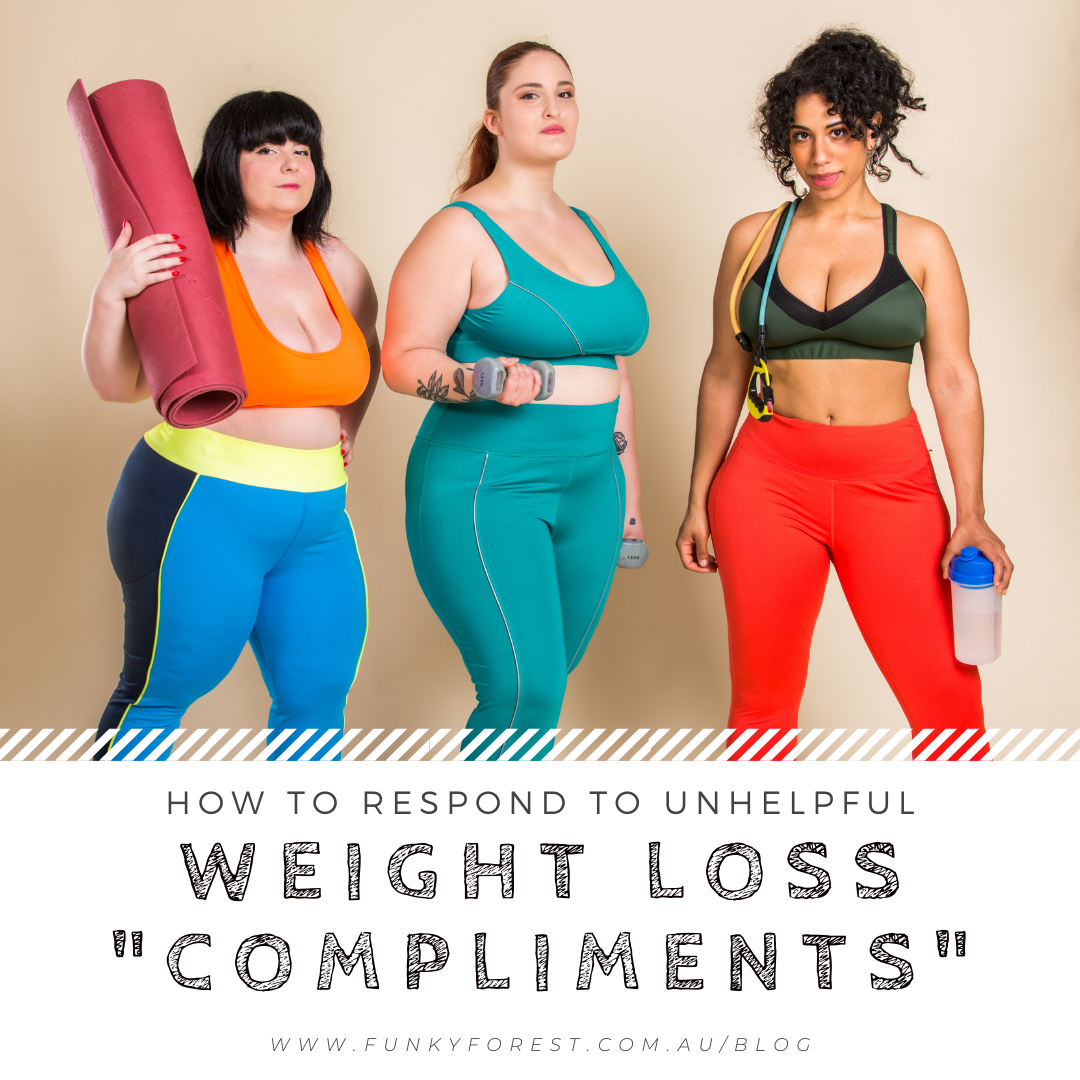
How to Respond to Weight Loss "Compliments" +  Body Shaming in Yoga and Fitness

22/11/2021

 
Picture
In this video I’m going to give you some ideas on how to respond to “compliments” about weight loss… especially when you have a history of disordered eating and body dysmorphia, and these comments actually make you feel uncomfortable or upset.

I'm also going to discuss how to respond when yoga students or clients in your practice or gym body-shame themselves.

And if you prefer to read, scroll down for the article.
​


​This week’s topic comes from Bree, who has given me permission to use her name: She wrote:
 
Right now I’m navigating how to inform others about diet culture, fat phobia, body dysmorphia, disordered eating disguised as “wellness”, when they (unknowingly) make a comment or compliment that is tinged with or fuels one of these things.
 
For example, when someone compliments me with “you’re looking great, you’ve lost weight”. It’s extremely triggering and uncomfortable for me (and so many others) with a history of disordered eating and body dysmorphia. One comment can have such a huge backlash for me if I’m not super mindful. It’s like I have to do damage control in the days after.
 
I usually smile or laugh but I would love to feel more comfortable having a conversation around it with them, as well as with my clients when I notice the way they speak about food or their bodies.
I’d love to hear your thoughts!

 
This is a tricky situation, and you’re right Bree when you say that many people feel uncomfortable when receiving these types of comments and struggle with what to say. Especially folks who might have dealt with disordered eating or body dysmorphia, and even those who have discovered intuitive eating, body kindness, fat acceptance, anti-dieting, etc., and are on the road to making peace with food and healing their body image.
 
A comment like, “you’ve lost weight, you look great!” Can really derail some of that hard work you may have put into healing.

In the yoga world we might hear variations on this, for example:

“Your body is looking amazing since you finished that juice fast!”

"Your jump throughs look so much smoother now you’re not carrying that extra weight.”


Or,

“You’re looking more pitta than kapha now! You looked a bit “juicier” the last time I saw you”

That last one was one I personally received from a yoga teacher... and I don’t even live in a larger body. I have thin privilege.
 
In the fitness world it’s:

"You look so good, you’ve leaned out!” 

“You’ve dropped fat mass, way to go!”

“Body comp
(composition) is on point!”

All of these are variations on the same theme of complimenting someone for perceived weight loss – “perceived” because sometimes the person hasn’t lost any weight at all.
 
And to be clear, for some people these compliments are going to make them feel better about themselves, at least in the moment. These aren’t the people I’m speaking to right now.

I’m speaking to the folks who have to do damage control in the hours or days after receiving such a compliment because it triggers them for all the reasons I’m about to explain.
​

"Soft" Weight Stigma

First thing: most of the time, people who give you weight loss compliments genuinely want to give you a compliment, and are trying to be nice.

It can be weird situation because you don’t want to be rude in your response, but you also don’t want to leave your values by the wayside.

 
The problem is, congratulating someone on weight loss isn’t always going to help that person feel better about themselves... and it reinforces harmful ideas about body size.

These comments can 
really galvanise weight stigma.

Weight stigma isn’t 
always overtly calling someone fat or body shaming someone. It can also come in the “softer” form of congratulating someone for losing weight. I call this soft weight stigma.

Praising someone for losing weight implies that their body was in some way bad, or worse, or unacceptable before. That’s a problem because it’s both weight-stigmatising, and just plain old untrue: weight loss does not make you or your body unanimously “better”.

 ​

How to respond to weight loss "compliments"


​So, how can you respond to this kind of unwanted body commentary? This is really going to depend on a few factors:
  • how much energy you’re willing to invest at the time
  • how strong in your disordered eating and/or body dysmorphia recovery you’re feeling in the moment
  • how much emotional labour you want to put into explaining concepts like weight stigma or fat phobia to the person
  • how YOU are feeling emotionally, and
  • who the person is, specifically what your relationship with them is like.
 
Say it’s someone with whom you feel comfortable sharing a little bit about your life with, you could say something like, “it’s interesting you say that, I’ve actually stopped dieting and focussing on weight loss... and I feel better for it.” This keeps it short and sweet without being too confrontational, and lets them know you no longer see weight loss as a goal.
 
If you’ve got more emotional and mental energy on board that day, and you’re closer to the person, you could divulge a bit more about why being complimented on weight loss or body size doesn’t feel great to you, given all the hard work you’ve been doing to unlearn disordered thinking around food and body weight. 

A step further would be to disclose your intentions or successes so far in healing from disordered eating and body dysmorphia, or to answer some questions they might have about diet culture, weight stigma and so on.

Again, you’ll need to gauge where you’re at in the moment and check that you feel safe enough and have enough brain bandwidth to have a conversation like this.

 
Just remember that diet culture messaging permeates our existence from the moment we are born… burning diet culture to the ground is a big job. It can feel like there’s a lot of pressure to educate others about what it is… that’s a lot of pressure on YOU! You don’t have to explain anything or educate anyone in that moment… unless you and the person are open to that. 

First and foremost, look after yourself. This is a central part of my upcoming online course: nutrition and body image training for yoga teachers.
 
If the person is more of an acquaintance or someone you don’t know well, or you just can’t be fucked engaging in that moment, a short, neutral response could suffice. Something like, “I haven’t been trying to lose weight.” Or, “Oh? I hadn’t noticed”. Then quickly change the topic. It’s ok not to dive into to full activist or educator mode.

Look after yourself first.

 
Sometimes these comments are going to trigger some pretty strong feelings in you: annoyance, anger, visceral rage. Especially if you’re a larger bodied person who has has dealt with a lot weight stigma and bullshit body commentary in your life. Sometimes expressing your anger might be exactly what you need in that moment. You don’t have to rip into them, but saying something like “can we please not talk about my weight.” Or “Having you comment about my body makes me feel uncomfortable / anxious / angry / etc”. Or, “that’s super triggering for me. How about we don’t talk about my body size.”
 
This might feel confronting, but if the person is someone you want to have an ongoing relationship with, they might need to know how these comments affect you. It could also prompt them to think more deeply about the ways they offer body commentary in the future, and they could learn from the experience.
 

How to respond when others body shame themselves


​With friends, fitness clients or yoga students making body shaming comments about themselves in your class or in your clinic, you could keep it light, for example:

"Hey, that’s my friend you’re talking about right there!”

Alternatively you could go deeper… pull them aside later and say, “I heard you say xyz about your body today, and I’m wondering if you’d like someone to talk to about that? I’m here if you need me.” 

The invitation is there for them to take you up on the offer. In the right context, offering slivers of your own journey can be helpful. Or if they’re receptive to it, gently letting them know there are ways to improve body image and feel better about themselves, without having to lose weight or change their appearance.

Having anti-diet, body positive books in your yoga studio or clinic can initiate conversations, and knowing providers – body inclusive, HAES dietitians (ehh hemm, you're reading the words of one!), psychologists etc. who you can refer on to can really help.
 
You could try writing out a list of possible responses on your phone or even practise these aloud, to figure out what feels right for you in certain contexts.
 
Unhelpful body commentary, disordered eating and body image concern are HUGE issues burning through the yoga and wellness worlds, which is why in a few months I’ll be launching my online nutrition and body image training for yoga teachers and yoga practitioners. In this training I cover what we as yogis and other fitness professionals can do to get solid on our understanding of basic nutritional science, disrupt diet culture as it shows up in the yoga world, and make our classes and our community safer for everyone! 

I hope that gives you a starting point when knowing how to respond to unhelpful body commentary, either directed at you or when it's self-body shaming coming from others. If you have comments or questions please pop them in the comments box below!

In body-inclusive solidarity, 
Casey​​

10 Ways Disordered Eating Shows Up In Yoga

15/11/2021

 
Picture
​Last week I explained what disordered eating is, in a general sense. This week I've I zoomed in and discussed some of the most common ways disordered eating shows up in the yoga and wellness worlds.

Here's the video, but if you prefer to read, just scroll down.

​

Ahimsa: a different interpretation

In yoga, the yamas are tenets of moral conduct. There are five yama principles: the first is ahmisa.
 
Ahimsa is the practice of abstaining from being “violent” or hurtful in one’s thoughts, words, feelings, or actions. It is the foundation of the other yamas because it’s the stance of “right relationships”. In practising ahimsa, we learn to have compassion for ourselves and for others.
 
The concept of non-harming is well known and recited in yoga circles, usually to substantiate the reasoning behind practising vegetarianism or veganism.
 
However, folks with disordered eating may hide behind the ethical aspects of vegetarianism to justify and protect their eating behaviours. I see this in SO many of my clients. I personally did this, for years.

What started as a genuine concern for animal welfare quickly became hijacked by a growing eating disorder and 
was used to disguise and excuse my unhealthy relationship with food.
 
In no way am I saying that everyone who is v*gan has an ED. As teachers, health professionals, and concerned allies we need to respect people’s current food choices, while also inviting them to listen to and honour their body’s needs. And we need to know how to spot the red flags, which I’m about to describe to you.
 
In the yoga and wellness worlds, ahimsa is often reduced to not hurting other people and mitigating violence against animals, but sometimes there is little to no regard for the level of violence being turned inwards. 

Veg*ism without regard for the wellbeing of the self is ONE of the many ways disordered eating show up in yoga. Harm is compounded when vegetarian or vegan folks insensitively, or even aggressively espouse their dietary doctrine onto others.
​

10 examples of disordered eating in yoga

Usually folks practising these doctrines don't realise that their eating is becoming disordered, especially because their intentions start off so positive - what could go wrong?

But these ideas and behaviours can rapidly take on a life of their own, becoming excessive, obsessive, and leading to more serious restrictive eating behaviours... or even full blown eating disorders.

Here are 10 of the most common ways I've seen disordered eating sneakily show up in the yoga and wellness worlds:

​
  1. Fasting, with juice cleanses, celery juice protocols, or water fasts. With many of us already concerned with purity and discipline, yogis are easily lead to believe that we need to “detox”. It doesn’t help when a yoga studio sells copies of “The Medical Medium” espousing that the secret to healing all ills is celery juice. Or that 1, 3 and 5-day home-delivered juice cleanses are promoted by senior yoga teachers and advertised in the yoga studio foyer and marketing. 
  2. Avoiding whole food groups or macronutrients, for example carbs. On that subject, it is not uncommon for live-in yoga teacher trainings to provide meals that are nutritionally inadequate. Despite huge days of physical training, the food offered to trainee teachers is often too low in calories, carbohydrates, and/or protein, depending on the dietary doctrine of the people in charge of running the training.
  3. Chronically under eating or skipping meals in a misguided belief that we need to “rest” the digestive system or err on the side of yogic or Buddhist asceticism. You may also know this as intermittent fasting.
  4. Adopting Ayurveda's most extreme panchakarma routines regardless of our constitution, medical history or current health status, and without proper medical supervision. I discuss this in detail with Narayana Commerford in episode 1 of my podcast Non-Diet Yogi.
  5. Clean eating obsession, and eating foods we hate as a result. Diet culture tells us to stress about what foods are “good” or “bad”, “allowed” or “not allowed”, “clean” or  “toxic”. As a result we may replace commonly vilified foods with “cleaner” versions. For example, eating zucchini noodles instead of actual pasta. Or drinking a green smoothie or celery juice when we really want or need a proper meal. Additionally we may consume foods for their purported health benefits even though they taste revolting, e.g. drinking apple cider vinegar (ACV) every morning. We deprive ourselves of foods we truly love and instead consume things we despise, all in the name of “health”: a phenomenon known as The Wellness Diet.
  6. Continuing to practice strict vegetarianism, veganism or raw food-ism even when our health is visibly suffering due to nutrient deficiencies inherent in some of these dietary approaches. 
  7. Spending lots of money on superfoods, fancy juicers, supplements (possibly to supplement a deficient and restrictive diet) when we don’t actually have that kind of money to spend, or it would be better spent getting help for disordered eating.
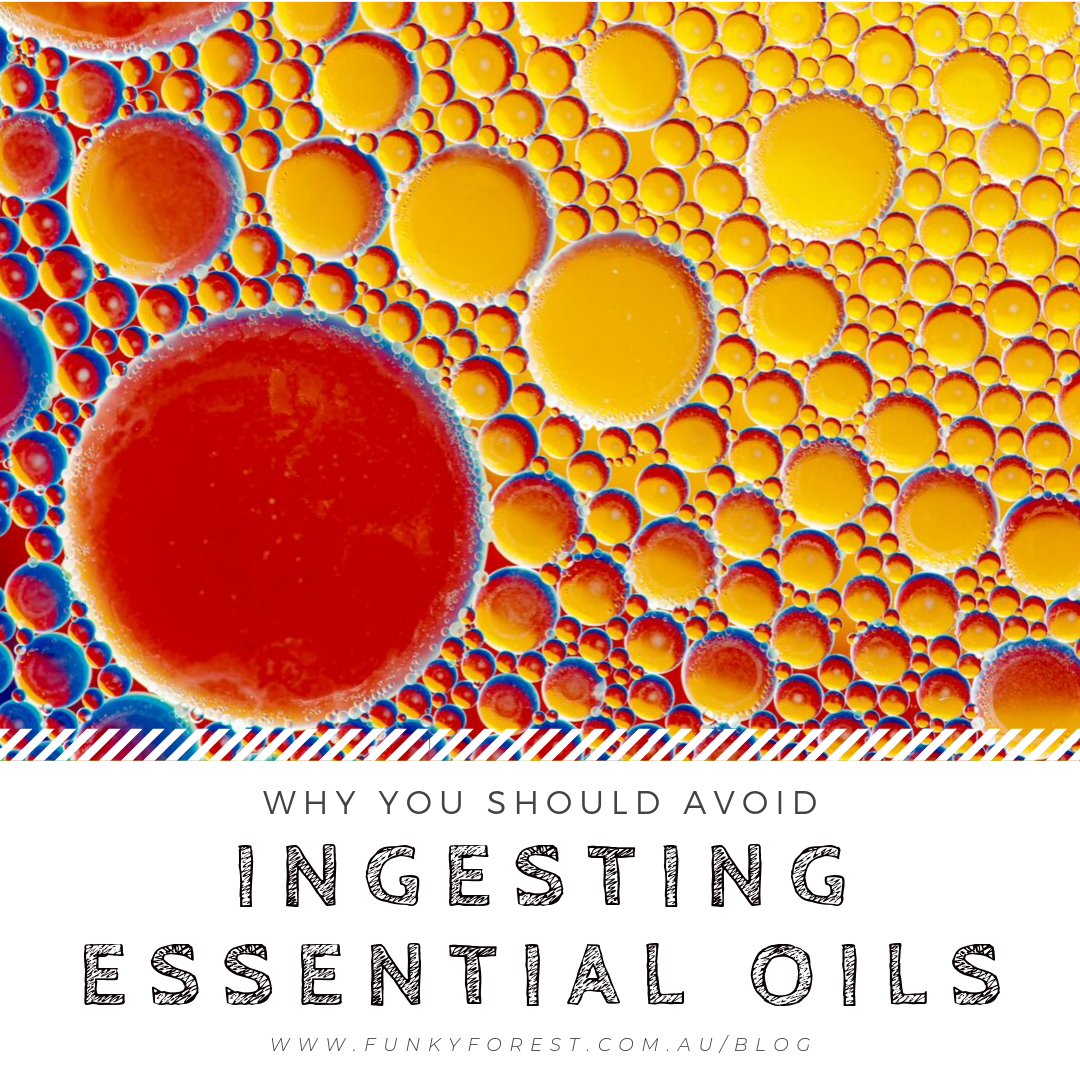
  8. Ingesting essential oils, often because a yoga teacher is a distributor for an essential oil MLM and wants to add students to their downline a la Elena Brower. Simply put, ingesting essential oils on a regular basis without medical supervision is dangerous. This practice ties into supplement taking, and yes - there are MLM essential oil blends marketed for fat loss and appetite suppression, a concept which is both disordered and dangerous for all the reasons I describe here.
  9. Taking IgG food intolerance test results to heart and cutting out a bunch of foods we don’t actually need to eliminate. I go into depths with this topic in my elimination diet email series.
  10. Combining multiple wellness diets. This all gets especially confusing when people try to combine Ayurveda with raw foodism, paleo, keto etc. as many of these philosophies completely conflict with each other and people end up eating hardly any foods at all.

​​​These are practices that on the surface may seem benign, and folks undertaking these fasts, elimination diets and so on might even be applauded for how well they are taking care of their health.

But these are all examples of disordered eating disguised as "wellness". And disordered eating is the biggest predictor of developing an eating disorder, the deadliest of all mental illnesses.

​

Self-compassion is key

As someone who has practised yoga and immersed myself in yoga culture for nearly two decades, believe me when I say I have visited (and re-visited) most of these harmful dietary practices… and I have paid for it, in terms of my physical, emotional and mental health.

It took me years of hard work to recover from the damage done to my body by wellness-diet culture. I now help people heal from these issues in my role as a holistic dietitian / nutritionist, frequently spending time unravelling the damage done by these harmful wellness and dietary practices.
 
In short, we can’t practice non-violence towards others without first demonstrating real compassion for ourselves. To truly practice ahimsa we first need to extend non-violence inwards to support our own life functions.

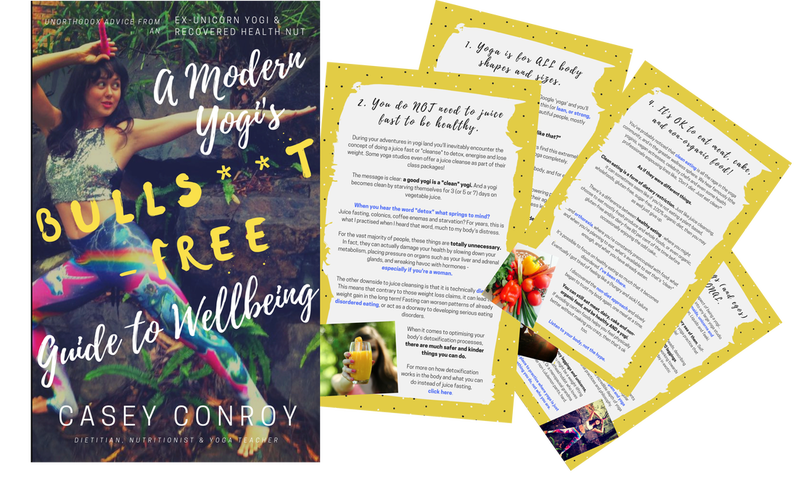
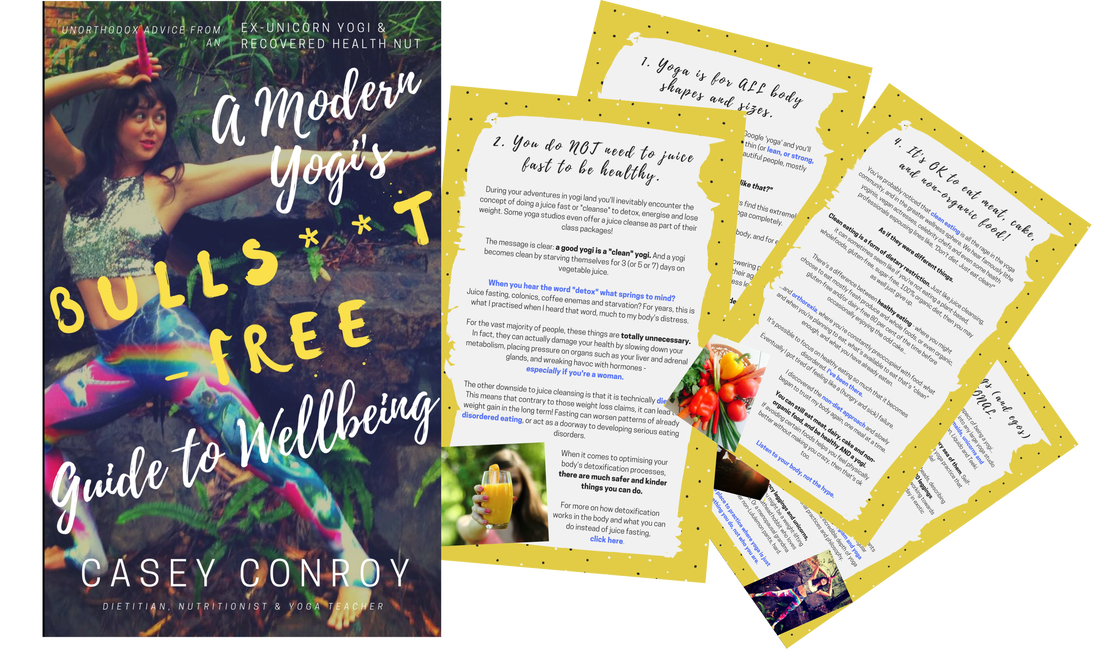
Does this resonate for you? To begin the deep dive into this work, you can get my FREE e-book, A Modern Yogi's BS-free Guide to Wellbeing by clicking on the ebook below.
​

Picture
Thanks for reading, I'd love to hear your thoughts in the comment box below!
​
Casey x
What is Disordered Eating, Actually?

8/11/2021

 
Picture
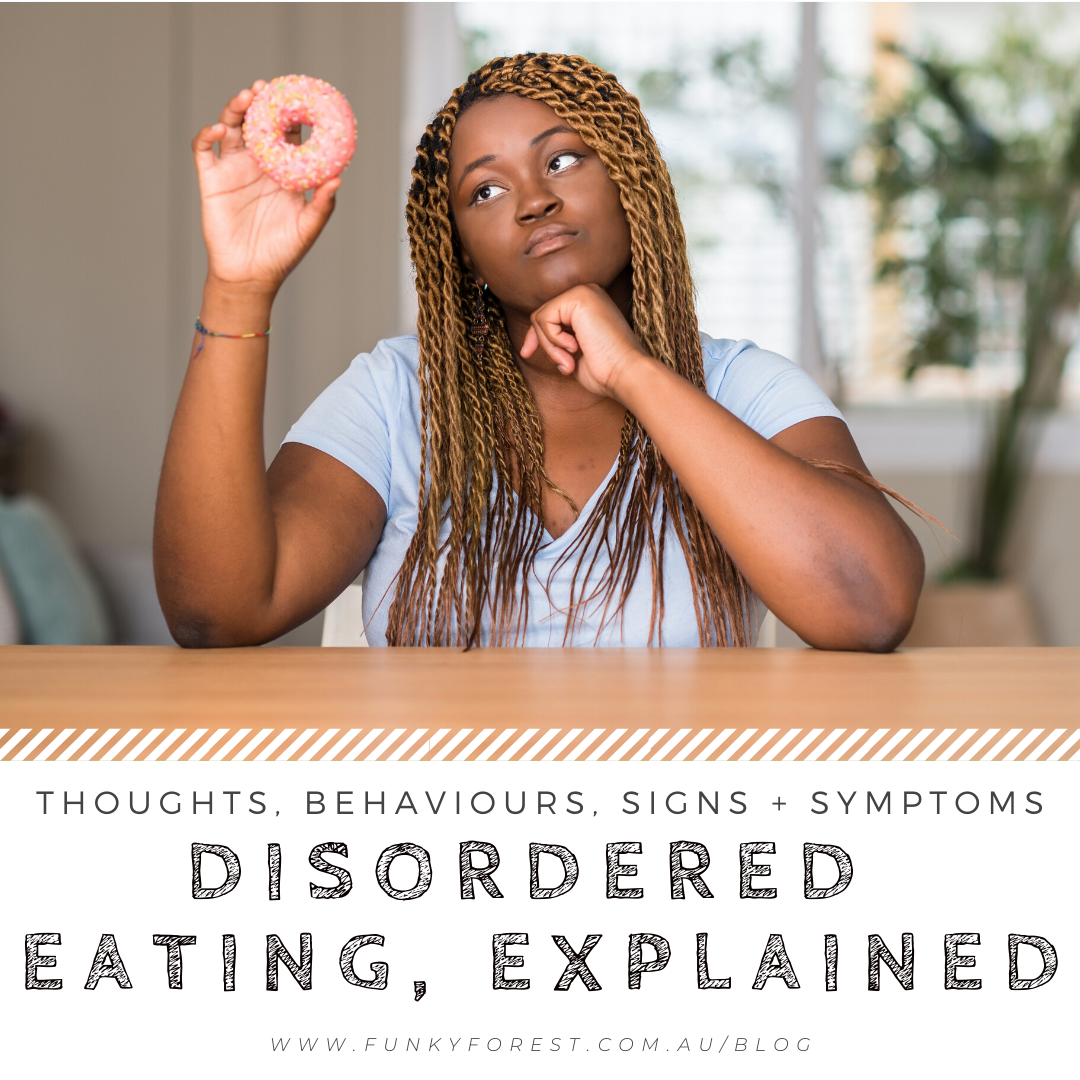
In this week's vlog I discuss some red flags that may indicate disordered eating: thoughts, behaviours, and physiological signs and symptoms. Unfortunately the sound quality wasn't awesome due to an average internet connection, so I will pop the main points under the video below. Enjoy!

What IS disordered eating, actually?


​Think of a spectrum of eating behaviours... from "normal" eating all the way through to eating disorders. In between these two polarities lies this grey area where eating isn’t normal but it doesn’t qualify to be a clinical eating disorder like anorexia or bulimia nervosa.
 
Many health professionals use the term “disordered eating” to include everyone along the disordered-eating spectrum: people with diagnosed eating disorders, as well as those who don’t have a diagnosis but struggle with harmful thoughts and behaviours related to food.

So disordered eating includes this grey area – and it's a far more expansive range of people than the term “eating disorders” (EDs) alone.
 
There are MANY people who don’t meet the diagnostic criteria for EDs but who still struggle with disordered thoughts and behaviours around food. Behaviours that have a negative impact on their quality of life, and often the lives those around them.

Thoughts + behaviours that are red flags for disordered eating


  1. Obsessing about body weight: frequent weighing (e.g. every morning) and measuring, body checking in mirrors, pinching body parts, asking others if you look fat, trying to control body weight.. and of course food and eating related behaviours to control weight…
  2. Overt interest in fad diets: Always wondering about or researching the latest diet fad: e.g. spending hours googling keto recipes
  3. Counting things e.g. calorie or macro restriction
  4. Chronic restrained eating: you might not count calories or carb grams - you might not “diet” as such -  but you’re always aiming to eat as little as possible, or putting off eating as long as possible.. consciously or otherwise. This one is SO COMMON!
  5. Skipping meals: Also known as intermittent fasting
  6. Detoxing: especially if this is regular practice. Common forms of these in the yoga world are juice cleanses e.g. celery juice cleanse, detox diets, and water fasting
  7. Cutting out whole food groups without medical recommendation or supervision, perhaps cutting out carbs after self-diagnosing a condition like candida overgrowth or being told you have a food intolerance because an IgG antibody test told you so
  8. Bingeing, which many people do as a result of dieting/restrictive eating. This can eventually push you into...
  9. Engaging in the cycle of over-eating, and then restricting or dieting, which I describe as The Wellness Diet Cycle (borrowing a term from Christy Harrison) and explain in more detail here
  10. Fixation on clean eating: Stressing about what foods are “good” or “bad” or “allowed” or “not allowed”? Or what foods are “clean” and which are “toxic”? Clean eating can very easily turn into disordered eating.
  11. Compensatory behaviours, like eating very little all day leading up to a social dinner in order to “save calories” for it, exercising to burn off food, or vowing to restrict in the future
  12. Bulimic behaviours, such as purging through vomiting, laxatives, enemas, colonics, or exercise
  13. Spending money on and using supplements marketed as fat burners or weight loss supplements, including natural ones e.g. Garcinia cambogia
  14. Avoiding eating out with friends or social gatherings for fear of being made to eat foods they deem too unhealthy
  15. Using weird tactics to covertly eat less when you ARE forced to be in a social eating situation
  16. General fear, anxiety, or feeling out of control around food.
 
As you can see, many of these are so common we’ve come to think of many of them as “normal”. After all...

Isn’t it normal to feel guilty if we don’t eat 100% clean?

Isn’t trying to burn off any transgressions at the gym or in a hot yoga class, the right thing to do?

Maybe I don’t say yes to going out to ice cream with friends for the 4th time, but that’s only because I'm trying to get healthy…. aaaand not mess up my macros?
​
​Surely it’s ok to do a seasonal 3-day juice cleanse to reboot, and a bit of weight loss wouldn’t hurt?

 
Nope, none of these thoughts and behaviours are normal, and in fact they may be red flags for disordered eating.

Signs + symptoms THAT ARE RED FLAGS FOR DISORDERED EATING


Additionally, here are some physiological signs and symptoms that may indicate disordered eating:

  1. Period and fertility issues: Irregular periods (missing periods), amenorrhea, or fertility  problems like problems conceiving
  2. Loss of sex drive: in men and women
  3. Digestive disturbances e.g constipation, IBS, food intolerances which ironically are often caused in the first place by food restriction
  4. Fatigue, poor sleep, and mood issues
  5. Loss of muscle mass, a phenomenon known as sarcopenia or where muscle mass shrinks and/or becomes "saggy"
  6. Hair falling out or becoming brittle
  7. Skin and nails become less lustrous and weaker, and may grow more slowly
  8. Poor immunity, i.e. getting sick more often than usual
  9. Poor sports performance or higher incidence of injuries and having to opt out of meets and comps because of it.
 
As you might be realising, these signs of disordered eating are often used as reasons to go harder or stricter with the food restriction or diet, rather than warning signs that the disordered eating has gone too far.

Hopefully this gives you a starting point when screening your clients, yoga students or yourself for disordered eating.


Does this resonate for you? To begin the deep dive into this work, you can get my FREE e-book, A Modern Yogi's BS-free Guide to Wellbeing by clicking on the ebook below.

Picture
Thanks for reading, I'd love to hear your thoughts in the comment box below!
​
Casey
On separation, and doing hard things

1/11/2021

 
Picture
I just sent out my newsletter ​for the first time in nearly a year. In it, and with a still somewhat curious sadness yet acceptance in my heart, I replaced the photo from my last campaign - a photo of Andreas and I - with the above solo one of me.

That's because we separated very early this year. Our divorce is just around the corner. 

What followed has been the hardest year of my life. Separation. Preparing for divorce. Property settlement. Shared child care arrangements. Massive financial stress. Not knowing where the kids and I would be living in a year. Planning for a completely different future I had envisioned for myself and my kids.

I think I've spent long periods of time thinking that if I have done enough yoga, meditated enough, attended enough couples counselling sessions, read all the parenting books, done the conscious marriage courses, that things will be perfect... or something near it.

But that's the thing about seeking security, or perfection, or "balance". Life has a way of going, "yeah, nah... not so fast." And throwing a bucket of paint all over you when you're donned in your finery. Or landing you with three bills over $2000 in one week (that happened to me last week).

Equanimity, this sentiment of "the only constant is change, accept it", is easy to swallow on paper. I have buddhist leanings, so am familiar with the concepts of suffering and pain as inevitable parts of life.

Being equanimous doesn't mean this shit doesn't hurt, though. You can accept things change and end. And it can also still hurt like hell.

But perhaps, it hurts a little less if I accept it, than if I resist and fight and wish it was all different (which I definitely do at times).

To be fully alive, fully human, and completely awake is to be continually thrown out of the nest. To live fully is to be always in no-man's-land, to experience each moment as completely new and fresh. To live is to be willing to die over and over again. 
- Pema Chodron, When Things Fall Apart

So what has it been like? Well, primarily... it's been a rollercoaster of emotions. 

Grief, so much grief.

Guilt, that I couldn't make things work between us... and for not always being able to navigate my way through it with grace and dignity. Anger, at all the unresolved issues between us. Disappointment that the two kids, happy marriage and white picket fence ideal that seemed finally within my grasp, disintegrated in my hands.

To make ends meet I went back to working as a veterinarian, my original qualification. I needed stability and security, something that working for myself couldn't provide at that point in time. It wasn't my heart's work but I found satisfaction in it and the people I worked with were amazing. Thank you Maleny Veterinary Services!

The thing is, working as a vet and reconfiguring my long term goals to build my skills in that area, left little space for anything else that gave me joy. 

I stopped teaching all of my classes, except for a loyal group of women I was running privates for... and even that had to be put on hold after a while.

I drastically reduced my nutrition client work. My work with eating disorder clients, women trying to balance their hormones or have babies. Deeply rewarding work I just didn't have the brain space for with my other vet work going on at the same time... and more accurately, with the inner turmoil I was experiencing.

I referred on all health professionals seeking mentorship because I didn't have the energy to give them my 100%.

But it hasn't all been doom and gloom! I've also experienced intense joy and peace. Joy, at reconnecting with certain parts of myself I'd lost for some time. Peace, because I no longer need to suppress parts of myself that I had to keep contained in my marriage in order for it to "work". 

I've found wells of inner strength and resourcefulness I didn't realise I had. I remember now that I can do really hard things when I have to. 

The things that kept me going were:
  • friends, first and foremost. You know who you are. I love you.
  • journalling
  • seeing my psychologist
  • pranayama, in bed at night before falling asleep. Except when I'm exhausted, which happens more often than not now that I'm a single mum. 
  • time in nature
  • yoga asana and strength training, while not always consistent, definitely helped me keep my sanity.

It's funny how tough circumstances can make you dig more deeply into whatever tools and support you have... and make you realise that you do indeed have them. 

You have these too. And if you don't, look up nadi shodhana pranayama and start with that. It helps.

It has taken me this long to publicly talk about this, because I've been processing. Numbing out at times, out of necessity when I just didn't have energy or heart to "work on it" anymore. But processing, too.

In short, it has been a f*cking hard year. But I am finally starting to come out the other side. 

Just a few weeks ago, I quit my job at the vet. I miss my calling, my work in yoga and nutrition. I'm grateful for the experience, and I know that I need to do what I love to be truly happy... even if it doesn't come with a regular wage, automatic superannuation and benefits!

Despite all the shit I'm smiling in the photo above. I've managed to look for and be grateful for all the beautiful things in my life right now, of which there are MANY!

So if you, too, have had a hard year, I'm with you. Believe me when I say, it will get better. Remember, you have tools, and resources. I'd love to hear from you about any tools and resources (inner or external) that have worked for you when times have been tough.

​I'm still going through it, still learning, still grieving. AND. I'm so grateful for all this practice has taught me, and I can't wait to share it again with people again.


And if, for you, it continues to be a dark tunnel for now, know that you can get through it, you can do hard things, too.

What Yoga Teachers Need to Know About Nutrition & Body Image

1/11/2021

 
Picture

​In this video I talk about something that is very important to me and dear to my heart, as someone who is a part of the yoga community, and as a yoga teacher of 15 years...


That is the prevalence of nutritional misinformation, disordered eating, and body dysmorphia that I see in the yoga community, and the many ways these things are unfortunately perpetuated by the yoga and wellness industries.

I also discuss the ways that yoga and meditation can help heal food and body image concerns... both for ourselves and for the folks attending our classes.
​
Does this resonate for you? To begin the deep dive into this work, you can get my FREE e-book, A Modern Yogi's BS-free Guide to Wellbeing by clicking on the ebook picture below. Also please let me know your thoughts in the comment box, I'd LOVE to hear them!

Thanks for being here!
​Casey

Picture

    Categories


    Picture
    Picture
    Picture
    Picture
    Picture
    Picture

    POPULAR POSTS


    Picture
    Picture
    Picture
    Picture
    Picture
    Picture
    Picture
    Picture
    Picture
    Picture
    Picture
    Picture
    Picture
    Picture
    Picture
    Picture
    Picture
    Picture
    Picture
    Picture

    ARCHIVES


    October 2025
    September 2025
    August 2025
    July 2025
    April 2025
    November 2024
    October 2024
    March 2024
    November 2023
    June 2023
    May 2023
    April 2023
    March 2023
    February 2023
    January 2023
    October 2022
    September 2022
    July 2022
    May 2022
    April 2022
    March 2022
    December 2021
    November 2021
    July 2021
    January 2021
    December 2020
    November 2020
    October 2020
    September 2020
    August 2020
    July 2020
    June 2020
    May 2020
    April 2020
    March 2020
    February 2020
    January 2020
    December 2019
    November 2019
    October 2019
    September 2019
    July 2019
    June 2019
    May 2019
    March 2019
    February 2019
    January 2019
    December 2018
    October 2018
    September 2018
    July 2018
    May 2018
    April 2018
    March 2018
    January 2018
    December 2017
    October 2017
    September 2017
    August 2017
    July 2017
    June 2017
    May 2017
    April 2017
    March 2017
    February 2017
    January 2017
    December 2016
    October 2016
    September 2016
    August 2016
    June 2016
    April 2016
    March 2016
    January 2016
    October 2015
    September 2015
    July 2015
    June 2015
    May 2015
    March 2015
    January 2015
    December 2014
    October 2014
    September 2014
    August 2014
    July 2014
    June 2014
    May 2014
    April 2014
    December 2013
    October 2013
    September 2013
    July 2013
    June 2013
    May 2013
    April 2013
    March 2013
    February 2013
    January 2013
    November 2012
    October 2012
    September 2012
    August 2012
    July 2012
    June 2012
    May 2012
    December 2011
    November 2011

    MORE CATEGORIES


    All
    Allergies
    Autumn
    Ayurveda
    Babies & Children
    Best Of The Blog
    Body Care
    Body Image
    Body Inclusivity
    Body Positive
    Breakfast
    Breastfeeding
    Chocolate
    Consultations
    Cravings
    Desserts
    Detoxification
    Dinners
    Disordered Eating
    Dreaming
    Eating Disorders
    Education
    Environment
    Essential Oils
    Exercise
    Family Nutrition
    Farming
    Feminism
    Fermented Foods
    Fertility
    Fitness
    HAES
    Healing
    Health
    Health At Every Size
    Health On A Budget
    Herbal Medicine
    Herbs
    Homesteading
    Hormones
    Immune Health
    Integrative Medicine
    Intuitive Eating
    Lunch
    Magic
    Meditation
    Menopause
    Menstruation
    Metabolism
    Mindful Eating
    Moon
    Motherhood
    Movement
    My Personal Story
    Natural Cycles
    Naturopathy
    Non Diet Approach
    Non Diet Yogi Podcast
    Non-Diet Yogi Podcast
    Nutrition
    Omnivorous
    Paleo
    Permaculture
    Plant Spirit Communication
    Podcasts
    Postpartum
    Powerlifting
    Prenatal
    Probiotics
    Raw
    Recipes
    Recommended Reading
    Self Love
    Sex
    Simple Eating
    Skin
    Smoothies
    Snacks
    Social Justice
    Spirituality
    Spring
    Strength Training
    Stress
    Summer
    Superfoods
    Supplements
    The Wellness Diet
    Traditional Chinese Medicine
    Traditional Foods
    Traditional Wisdom
    Vegan
    Vegetarian
    Veterinarian
    Weight Neutral
    Wildcrafting
    Winter
    Witch
    Women's Health
    Yoga

    RSS Feed


    Picture
    Picture
    Picture
Practising on Gubbi Gubbi and Jinibara Country, with deep respect for the Traditional Custodians of this land - past, present, and emerging.
All bodies, genders, cultures, and neurotypes are welcome here.

📍 Conondale, Sunshine Coast, QLD, Australia
📧 info@funkyforest.com.au
🔗 Home • About • Clients • Podcast • Apothecary • Blog • For Practitioners
🪴 Follow:
Facebook
 • Instagram • Spotify • General Newsletter • Praccie Newsletter

Casey Conroy is an Accredited Practising Dietitian (APD), Naturopath, and Herbalist registered with Dietitians Australia (DA) the Naturopaths & Herbalists Association of Australia (NHAA). Information on this website and podcast is educational in nature and not a substitute for individual medical or dietetic advice. Always consult a qualified healthcare provider before making changes to your health or treatment plan.


No testimonials or case studies presented on this site constitute endorsement or typical outcomes.
© 2025 Funky Forest Health & Wellbeing | Website by Casey Conroy | Professional photography by Emelia Ebejer. Read our Refund & Returns Policy and Disclaimer